
A documentary in a web page
Go from orbit to a single room without a cut, keep the subject clear of the text on a phone and on a 4K screen, and load no 3D files.
برج العرب
A scroll-driven 3D story of Dubai’s sail-shaped hotel. One camera flies from a turning globe down to the Gulf, around the sail, through the atrium and the Royal Suite, and out to a helicopter landing on the helipad. Every wall, fish and dolphin is built in code: there is no 3D model file.
01 — The brief
I wanted to see whether a single web page could do what a documentary does: start in space, land on a building and walk you through it, with the scroll bar as the only control. The reference was Google Arts & Culture’s Meroë story. The subject was the Burj Al Arab, because its sail is one of the most recognisable shapes on Earth.
Go from orbit to a single room without a cut, keep the subject clear of the text on a phone and on a 4K screen, and load no 3D files.
The hotel, its interiors, the coast and the wildlife are made from three.js primitives, and the scroll position drives one camera through 43 hand-placed shots.
Just HTML, CSS and JavaScript, with Classic and Cyber modes, an Arabic edition, a narrated tour, free 3D exploration and a .glb export.
02 — The journey
Each stop is a camera shot that rests while you read its text, then glides to the next as you scroll. These are the six parts of the flight, rendered straight from the story.
 01
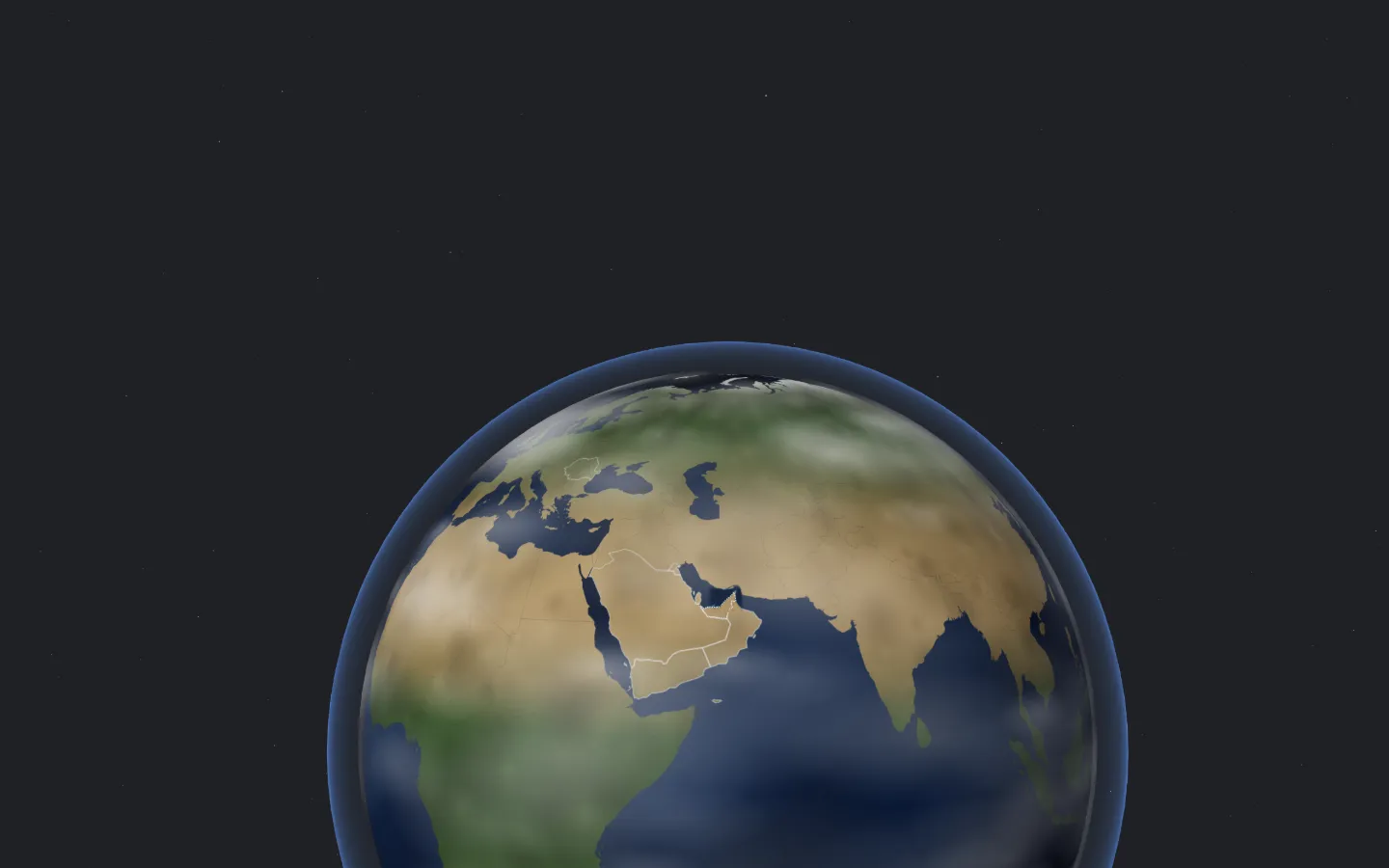
A turning Earth, then the UAE, Dubai and the coast. The camera is solved so each place lands exactly below the text, and the last zoom closes in on its target without swinging across the globe.
uae · dubai · jumeirah · dubaicoast
 02
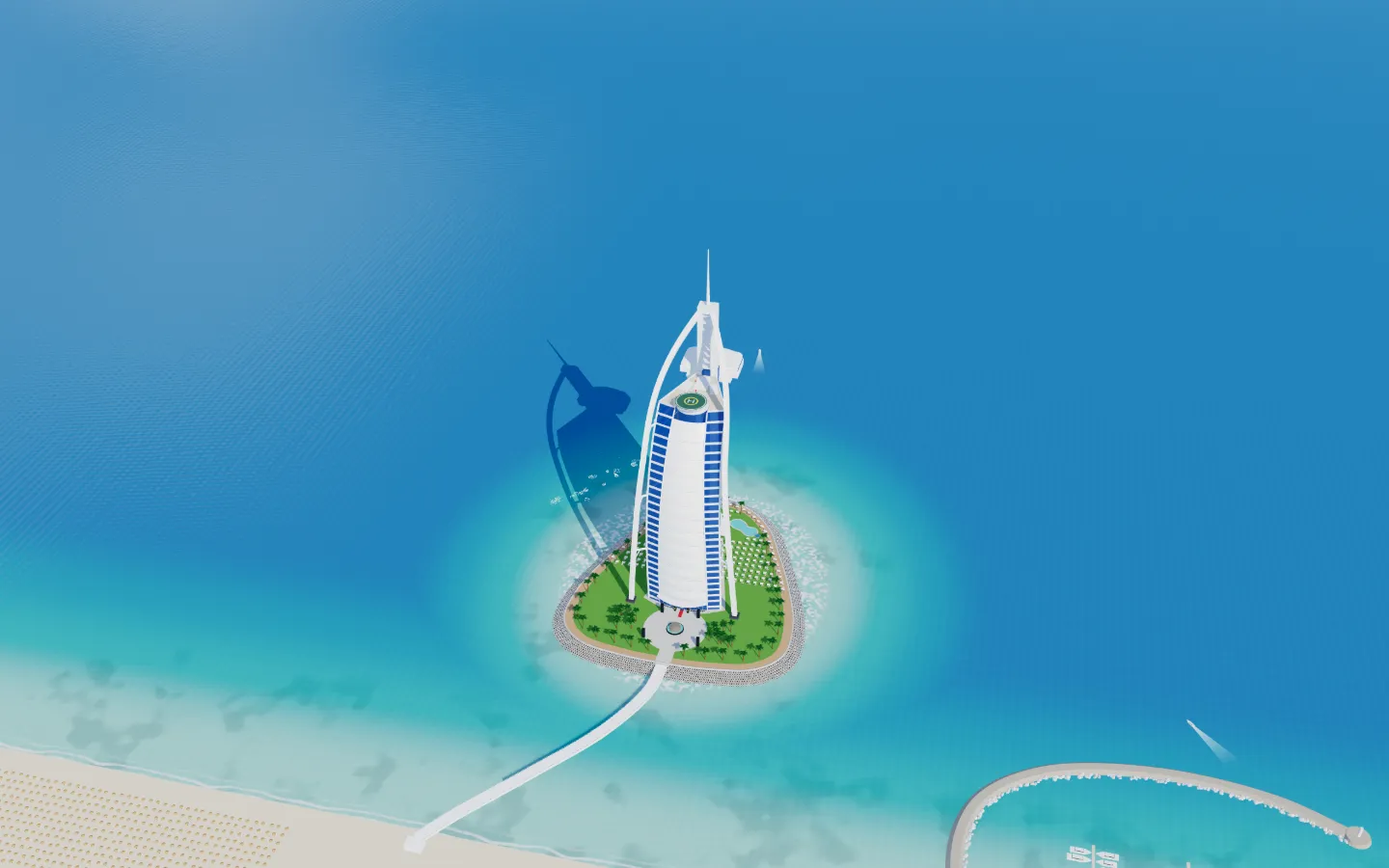
321 metres of sail on its own island, framed to fill the space the text leaves free, whatever the shape of the screen.
overview · explore3d · design
 03
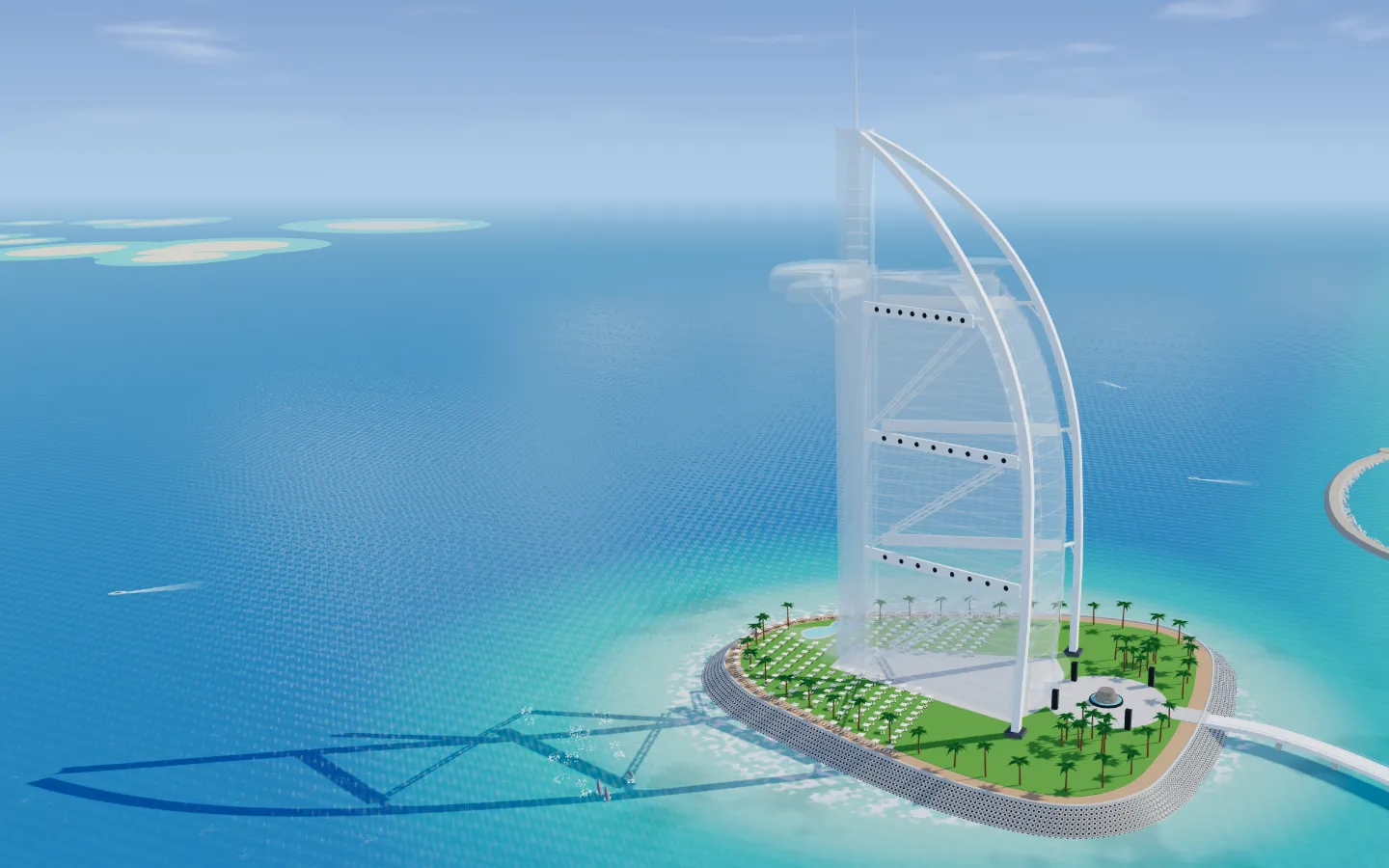
The island and its 230 foundation piles, the spine, the exoskeleton, the sail and the helipad, each brought forward while the rest of the model ghosts away.
island · foundation · exoskeleton · helipad · +6
 04
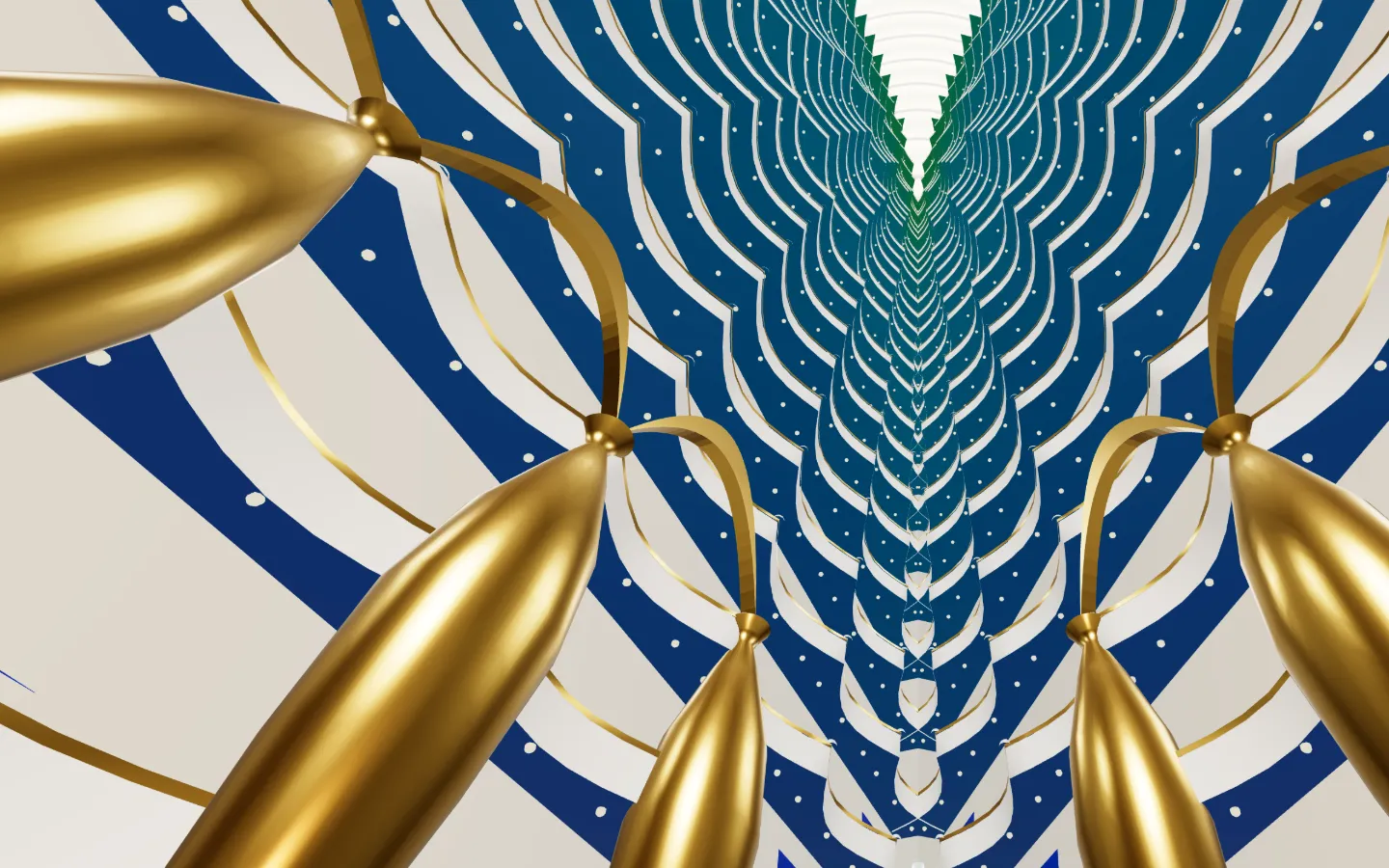
In through the entrance, past the reception and the lifts to the fountain and the atrium, then down a gold passage to the restaurant’s aquarium, where tetras school through planted tanks.
lobby · reception · aquariums · atrium · mahara · +9
 05
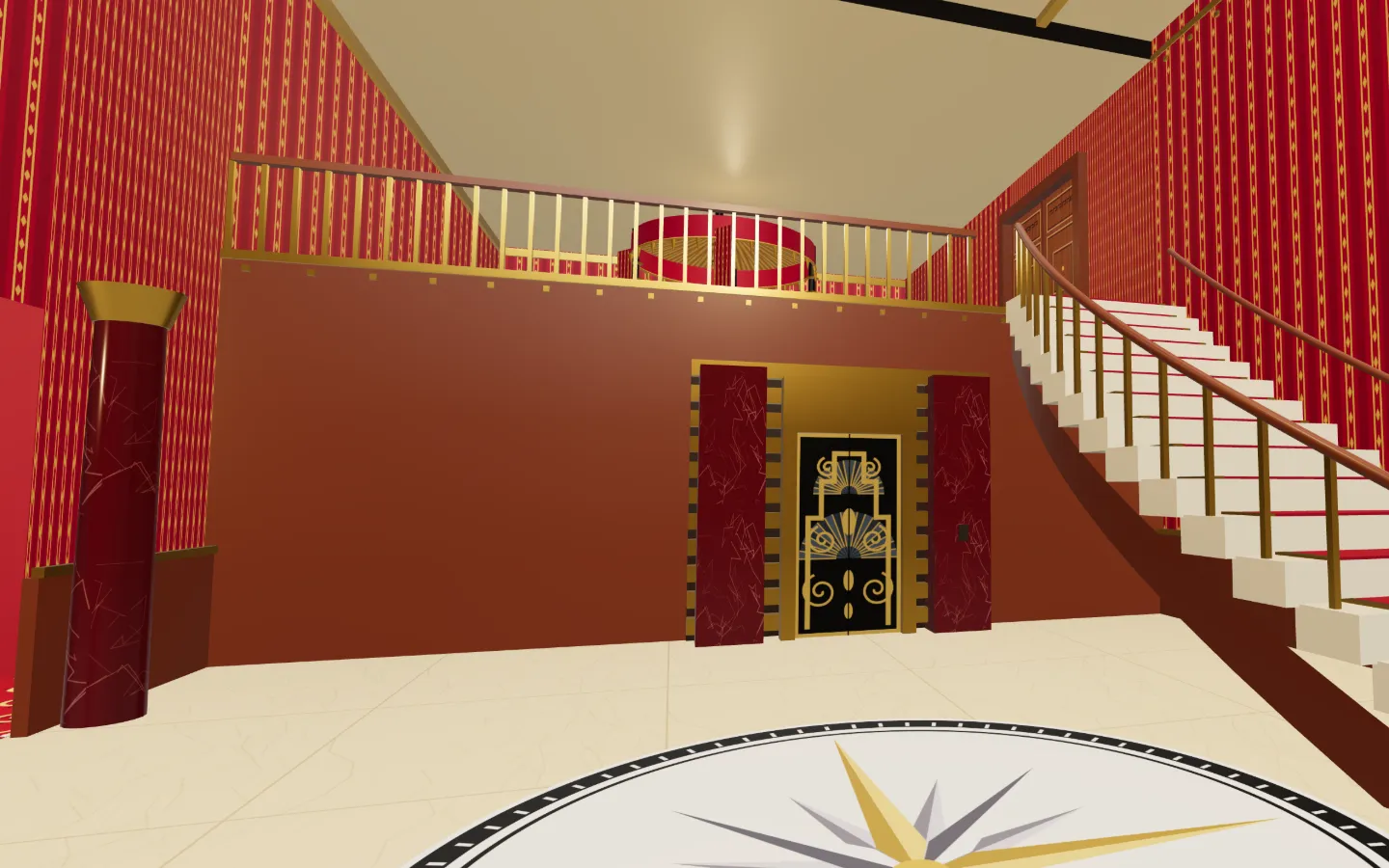
Red, gold and brown rooms with doors that swing open as you scroll: the majlis with a live web page on its TV, the dining room, the bedroom and the bath, then out through the window.
suiteDoor · royal · suiteMajlis · suiteTV · +5
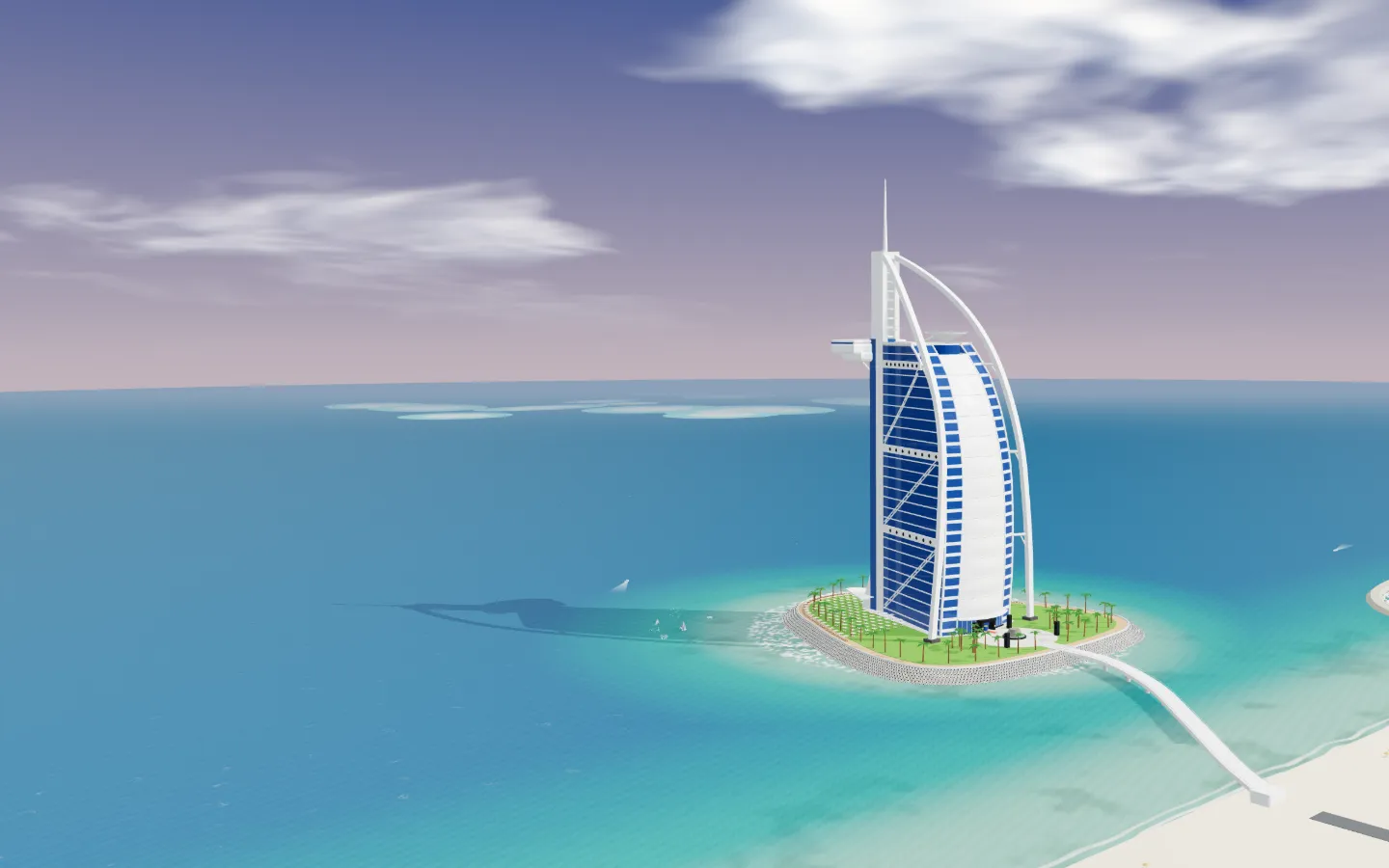 06
Out over the Gulf with gulls and dolphins, a golden-hour turn back to the whole hotel, and a helicopter that lands on the helipad as the story ends.
gulfView · finale · setting
03 — Under the hood
One 972-line module builds the hotel. One object places the 43 cameras. One small function turns the scroll position into a camera move.
// the whole hotel, in metres, +Y up
const hotel = createBurjAlArab({
  mastTop: 321,      // spire tip above the sea
  roofHeight: 195,   // top of the glass walls
  sailPanels: 13,    // tensioned fabric bays
  props: false,      // no palms or loungers
});
scene.add(hotel); // a THREE.Group of named parts
// one entry per <section id>: where the camera rests
overview: { bg: 'sky', layout: 'center',
cam: { target: V(0, 60, 10),
dir: V(0.42, 0.62, 0.66), dist: 980 } },
// indoors the camera walks in a straight line
lobbyHall: { space: 'atrium', walk: true,
cam: { target: V(-10, 3.0, 30), /* … */ } },function storyState() {
const mid = scrollY + innerHeight / 2;
// i: the stop above mid, t: 0 → 1 to the next
/* … */
// rest for the first and last quarter
const e = smooth((t - 0.25) / 0.5);
return { i, e, t };
}Try it: scroll between two stops
t 0.00 → camera 0.00
For the first and last quarter of the scroll the camera holds still, so the text card is steady while you read it.
The text sections are transparent over one fixed WebGL canvas. Only the current space (globe, outside, atrium, Al Mahara, suite) is drawn.
Each shot knows how big its subject is and moves the camera so it fills the space beside or above the text, from a phone to a 4K monitor.
13 automated tests check the model against references (roof about 200 m, arches meeting about 266 m, spire 321 m), its draw calls and its clean-up.
04 — Classic | Cyber
Cyber mode turns the hotel, rooms and globe into solid dark shapes with a thin neon rim, shows a telemetry HUD, and swaps the sea for a field of slow particles.
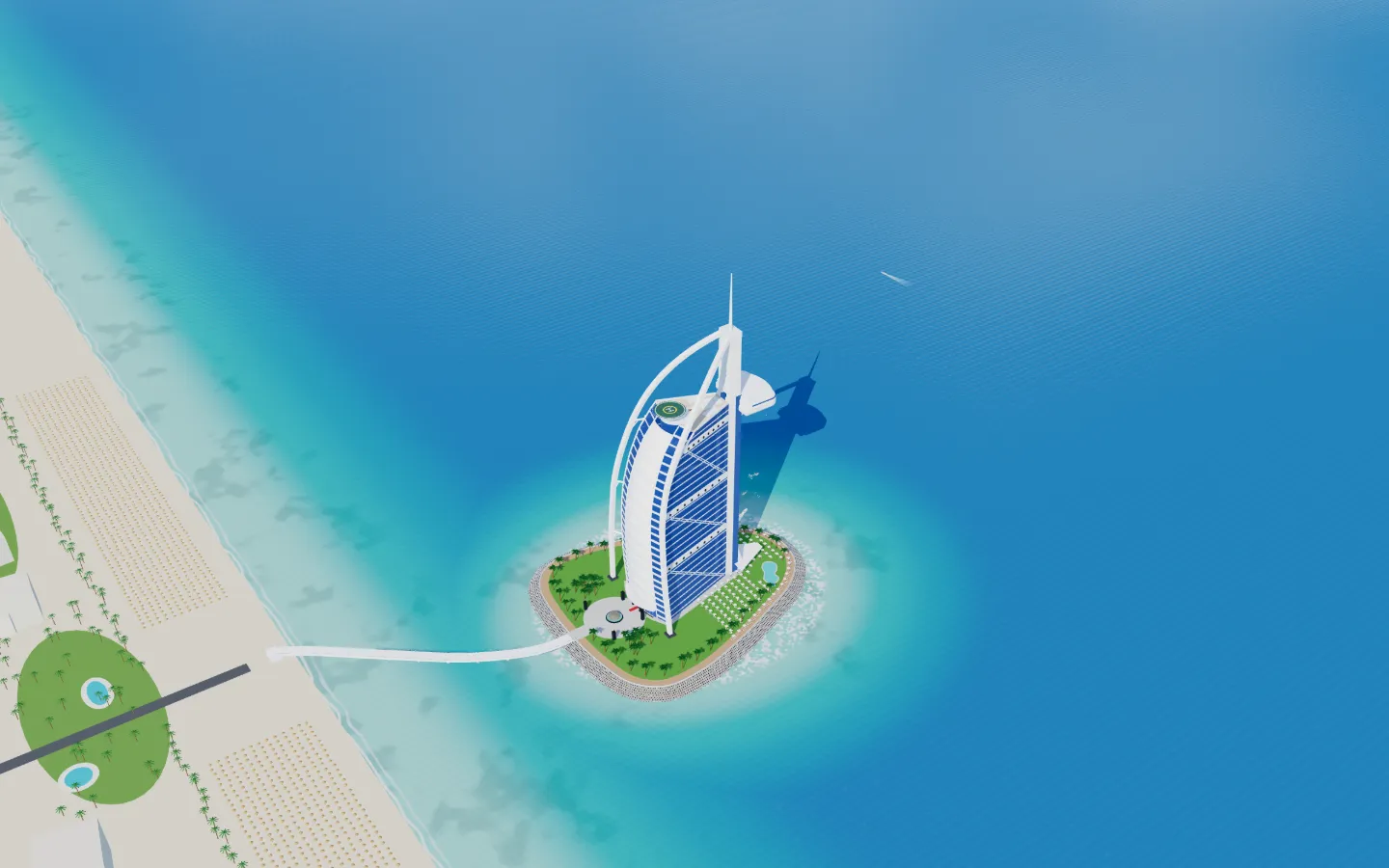
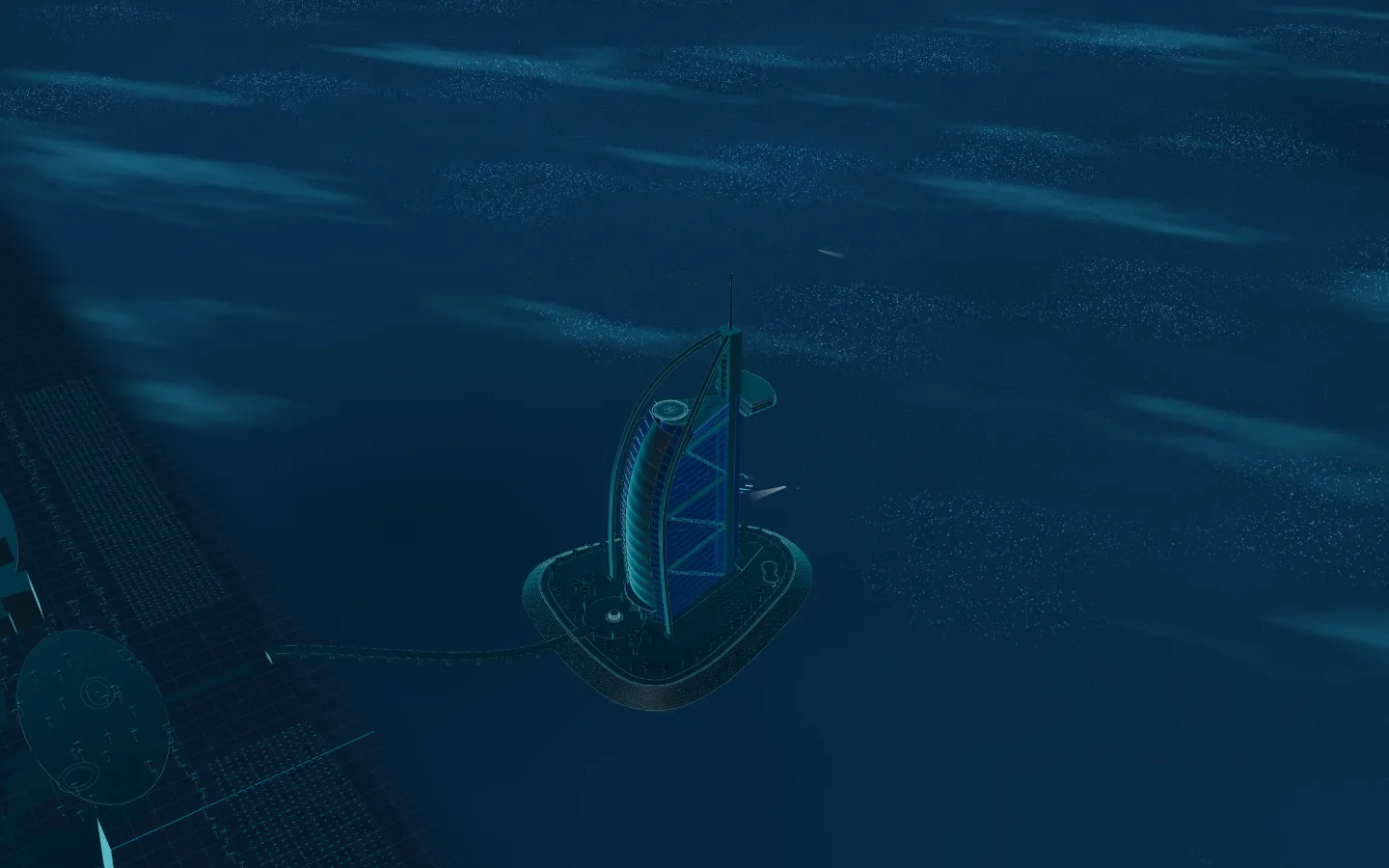 Classic
Cyber
Try it here
| Part | Classic | Cyber |
|---|---|---|
| Hotel | White & blue | Neon rim |
| Sea | Turquoise | Particles |
| Screen | Story cards | + HUD |
And in Arabic
ENInside the Burj Al Arab
ARداخل برج العرب
05 — What I learned
Turn a card over to see what solved it.
Blending aim, direction and distance separately made indoor moves arc out through the walls, and a canopy over the doors filled the screen.
Indoors the camera walks in a straight line with its aim trailing, and between rooms the aim turns early, so it looks where it’s going.
walk: true · walk: 'lead'
Glowing wireframes with a bloom pass looked exciting for a second, then blurred into a haze that hid the building.
Solid dark bodies with a thin fresnel rim and faint edge lines, and no bloom at all. The shape reads first, the glow second.
onBeforeCompile · EdgesGeometry
Building the scene held the main thread for over a second, so the loading animation stopped as a few dots, right when people were waiting.
The build pauses for a frame between big blocks, and the loader animates only transform and opacity, which the browser runs off the main thread.
await nextFrame() · transform + opacity
The design’s wide letter-spacing broke the joins between Arabic letters, so every word came out in loose pieces.
Letter-spacing is 0 everywhere on the Arabic page, and tracking stays only on text marked as English, like the brand line and coordinates.
letter-spacing: 0 · [lang="en"]
Scroll from orbit to the helipad, take the narrated tour, or explore the model freely. Best on a laptop or desktop; it works on phones too.
Independent educational project, not affiliated with Jumeirah or the Burj Al Arab. All images on this page are renders from the 3D story.
06 — Meet the maker
About me
Mohammad Azad · Senior UI/UX Designer, Product Designer, UI Developer and UI Engineer
I designed and built Inside the Burj Al Arab end to end: the storyboard of 43 shots, the look of both modes, the hotel modelled in code and the page that carries it. It’s the work I enjoy most, where a design decision and an engineering decision are the same decision.
One person, four roles
As the UI/UX designer, I…
As the product designer, I…
As the UI developer, I…
As the UI engineer, I…
Personal showcase, not a product, and not affiliated with Jumeirah. Every image on this page is a capture from the story. The full list of sources is at the end of the story.